
The Health Benefits of Spending Time Outdoors This Fall (Midwest Edition)
Quick answer: Spending time outdoors supports both physical and mental health — lowering stress, supplying vitamin D, sharpening focus, and improving sleep. Midwest autumn works against all of it: shorter days, colder evenings, and a hard freeze that can end backyard season by mid-October. A fire pit, patio heater, wind-blocking outdoor screen, adjustable louvered pergola and cold-weather-ready patio furniture remove most of that friction, so a Midwest backyard can stay in regular use well past the point most people bring the cushions inside.
Every October, most Midwest backyards go quiet. The grill gets covered, the furniture gets stacked in the garage, and everyone moves indoors until spring. That’s unfortunate, because fall is arguably the best time of year to actually be outside — cooler air, fewer bugs, and some of the best light of the year. The research on why time outdoors matters hasn’t changed with the season; what’s changed is how much effort it now takes to get out there. Here’s a look at four research-backed benefits of spending time outdoors, and what it takes to keep enjoying them through a Midwest fall.
How much time outside is enough to notice a benefit?
Around two hours a week, according to research published by the American Psychological Association, is associated with meaningfully better physical and mental health outcomes. That time doesn’t have to happen all at once — short outdoor breaks spread across the week add up the same way.
The catch in fall: when a 40-degree evening and a stiff wind are working against you, two hours starts to feel like a lot. A patio heater paired with an outdoor screen to cut the wind solves most of that problem — suddenly a Tuesday evening on the patio is comfortable instead of something to power through.
Does sitting outside actually reduce stress?
Yes. Research from the University of Michigan found that roughly 20 minutes in a natural outdoor setting can meaningfully lower cortisol, the hormone most associated with the body’s stress response.
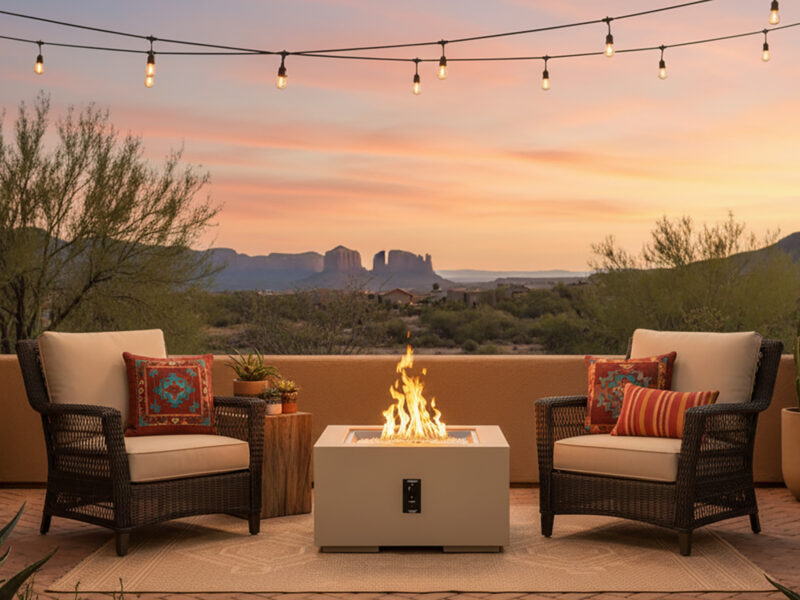
Fire itself appears to add to that effect. Cleveland Clinic psychologist Dr. Susan Albers has described how the sensory experience of sitting near a fire — the crackle, the warmth, the smell of woodsmoke — can trigger nostalgic, calming associations that support the release of mood-boosting brain chemicals like serotonin and dopamine. That effect isn’t seasonal, but a fire pit is the one piece of outdoor equipment that gets more useful, not less, as the temperature drops. A gas fire pit set up on the patio turns a chilly October evening into the exact kind of low-effort stress relief the research points to.
Can you get vitamin D just from being outside?
Yes — sunlight is the most efficient way most people get vitamin D, since it’s not naturally abundant in most foods. Skin exposed directly to sunlight converts UV rays into vitamin D3, and most people only need about 10–15 minutes of exposure, a couple of times a week, to meet their needs. That matters more in fall, when Midwest daylight hours shrink fast and it gets easier to go days without meaningful sun exposure.
According to the Mayo Clinic, vitamin D works alongside calcium to support bone strength, and on its own it also supports immune function and healthy muscle and brain activity. A weekend afternoon cozying up on a set of comfortable patio furniture — something actually built to sit in for an hour, not just decorative — makes it far more likely you’ll linger outside long enough for that sunlight exposure to count, instead of stepping out for two minutes and heading back in.
Does spending time outdoors improve focus and creativity?
Research suggests it does. A study of creative professionals in Denmark found that time spent in green, natural outdoor spaces was linked to sharper creative thinking, increased curiosity, and improved focus. Related research has pointed to similar effects — time in nature functioning as a practical tool for working through mental blocks, low motivation, or burnout.
Fall is a natural time to lean into time spent outside: crisp air and changing color tend to be more mentally restorative than a humid August afternoon — as long as the setup makes staying out there comfortable rather than something to grit through.
Does being outside actually help you sleep better?
Indirectly, yes. Your body runs on a roughly 24-hour internal clock — the circadian rhythm — that influences sleep timing, energy levels, body temperature, and hormone release, according to UCLA Health. Exposure to natural daylight, especially earlier in the day, helps keep that internal clock aligned with the actual day-night cycle, supporting more consistent, restful sleep.
An evening wind-down routine works well here: some time by a lit fire pit, shielded from the wind by an outdoor screen, is a low-stimulation way to close out the day before heading in to sleep.
Building a Midwest patio that actually survives fall
The research is consistent: time outdoors is good for you, in every season. The specific problem with a Midwest autumn isn’t the season itself — it’s wind, dropping temperatures, and shrinking daylight working together to push people indoors earlier than they’d probably choose to go. A few additions tend to make the biggest difference in how long a patio stays in real use:
- Fire pits and outdoor fireplaces — extend usable evening hours and add the stress-reducing, nostalgic quality research links to sitting near an open flame
- Patio heaters — offset dropping temperatures directly, especially useful for larger gatherings a single fire pit can’t fully warm
- Retractable Outdoor screens — cut wind chill and block sightlines, which matters more once falling leaves thin out natural privacy from trees and shrubs
- Patio furniture built for the season — durable, comfortable seating that holds up to cooler, damper fall conditions instead of getting packed away at the first cold snap
- Adjustable louvered pergolas — open or close the top as you see fit to best enjoy your time spent outdoors
The bottom line:
Time outdoors is linked to real, measurable benefits for stress, immune and bone health, mental focus, and sleep quality — and none of that changes when summer ends. What changes is how much effort it takes to get outside and stay there. In the Midwest, the right combination of a fire pit, patio heater, outdoor screen, and season-ready furniture is often the difference between a patio that goes quiet in October and one that stays part of daily life well into the colder months.
To build an outdoor living space you can enjoy well into the fall, visit Fireplace Stone & Patio’s showroom(s) in Nebraska and Iowa.